
SEO is dead. Again. People have been declaring SEO dead for about as long as search engines have existed. Sometimes a Google update sets it off, sometimes a new buzzword. The culprit this time? AI. With more and more people turning to ChatGPT instead of Google, many businesses are asking: Is SEO even worth it anymore? Shouldn’t you just focus on Generative Engine Optimization (GEO) instead?
Short answer: Yes, SEO is still key to your online success in 2026. In this article, we look at where SEO stands today and show you:
- why SEO is still worth it in 2026,
- how good SEO also boosts your AI visibility,
- how to tell whether SEO pays off for your business,
- what SEO and SEO services cost,
- and how to tackle SEO yourself, step by step.
- What does "worth it" actually mean for SEO?
- 5 reasons SEO is still worth it in 2026
- Self-test: Do you really need SEO?
- When is SEO not worth it?
- What does SEO cost in 2026?
- Do SEO yourself or hire an agency?
- How to do SEO yourself
- Bottom line: SEO is still essential to your success online
- Frequently asked questions (FAQ)
What does “worth it” actually mean for SEO?
SEO is worth it when the return outweighs the effort. On one side is your investment: your time, the cost of SEO tools, and maybe the budget for an agency or freelancer. On the other side is the return: qualified traffic that turns into leads and, ideally, revenue.
Unlike paid ads, SEO takes a while to pay off. You need to factor that in when you decide whether it’s worth it. Here’s a typical SEO timeline:
5 reasons SEO is still worth it in 2026
Here’s what still makes SEO a smart bet:
1. SEO lays the groundwork for AI visibility
Classic search and AI search rest on the same basics: a clean technical setup, good content, and authority. The overlap is biggest with Google’s AI Overviews: A 2025 study found that around 54% of cited sources come from the organic top 20 results, and almost every AI answer cites at least one high-ranking page. Rank well in Google’s regular results, and you’re more likely to show up in the AI answer above them.
With standalone tools like ChatGPT or Perplexity, the overlap with Google rankings is smaller. But the same factors still count: An analysis of millions of citations found that domain authority and backlinks are the strongest predictors of whether a page gets cited. Page speed, freshness, and topical depth round out the list. In other words: classic SEO basics.
The takeaway: Strong Google rankings don’t guarantee AI citations, but without solid SEO, you’ll struggle in both places.
2. Google is still the biggest traffic source
AI search is growing fast, no doubt. But the vast majority of searches still run through Google. Head to head with ChatGPT, the search giant holds a market share of over 99%. That makes Google your biggest source of organic traffic by far.
3. SEO builds assets that compound
Well-executed SEO builds assets that gain value over time: An article that ranks attracts visitors month after month. A genuinely useful page earns high-quality backlinks and strengthens your domain’s authority. And an optimized on-page structure, combined with well-placed calls to action, increases your conversion rate. Each of these gains feeds the others.
And unlike ads, SEO doesn’t stop working when the budget runs out. That said, you can lose rankings if competitors catch up or Google changes its algorithm. So keep your content fresh and run regular technical audits, for example with the Seobility Website Audit.
Here’s how SEO and paid ads compare:
| Criterion | SEO | Paid ads |
|---|---|---|
| Cost model | Mainly time, content, and optimization effort; no cost per click | You pay per click or impression; costs continue as long as the campaign runs |
| Speed | Fairly slow: results usually take weeks or months | Very fast: you can be visible right away |
| Longevity | Long-lasting: content can drive traffic for years | Short-lived: traffic usually stops when the budget does |
| Reach | Organic visibility in relevant search results | Targeted delivery by audience, location, interests, or keywords |
| Trust | Often seen as more credible because it’s organic | Often lower, since people know they’re looking at an ad |
| Control | Limited: search engines decide the rankings | High control over budget, audience, copy, and delivery |
| Measurability | Easy to measure, but the effect builds more slowly | Very easy to measure right away, especially for clicks and conversions |
| Use case | For long-term brand building and steady organic traffic | For quick leads, launches, and time-sensitive campaigns |
💡 Tip: If your budget allows, run both: Ads bring quick reach, while SEO builds lasting visibility and traffic for your brand.
4. SEO reaches people who are actively looking
People who search on Google have a specific need. If you show up at that moment, you get qualified traffic, not ad impressions wasted on people who have no intention of buying. These are prospects already looking for a solution like yours.
5. The cost of waiting keeps rising
Every month you’re not visible, you leave rankings and AI answers to your competitors. If you start early, you build a lead in content, backlinks, and authority that latecomers will find hard to close. And catching up costs more than starting now.
Self-test: Do you really need SEO?
Go through these nine questions. The more yeses you get, the more likely SEO is to pay off for you:
💡 Tip: You can check questions 1 to 4 right away. Seobility’s Keyword Research Tool shows you the search volume and competition for your topics, and a look at the current top 10 results tells you who you’re up against.
When is SEO not worth it?
Situations where SEO isn’t the right tool are rare, but they do exist. Think twice if one of these sounds like you:
Your sales come entirely from referrals or formal bids
Some B2B businesses win nearly all their deals through referrals, their network, or public bids. Nobody googles for a supplier; the purchasing department or a formal procurement process makes the call. If that’s your situation, SEO can wait.
You need results right now
Maybe a cash flow crunch or an event next week means the money has to come in now. People may be searching, but SEO is simply too slow for that, so paid ads are the better choice. That’s a temporary situation, though: Once the pressure eases, SEO is back on the table.
Your addressable market is tiny
Picture a supplier whose only potential customers are a handful of large corporations worldwide. Direct sales will reach those few buyers better than any ranking strategy. When the market is that small, personal contact beats search engines.
For everyone else, SEO is worth it. If people are searching for what you offer, you want to be found.
What does SEO cost in 2026?
There are four common ways to do SEO, from a fully managed agency model to DIY with a tool. They differ in cost, effort, and the expertise you need. The ranges below are rough guidelines:
| Approach | Cost | Expertise needed | When does it make sense? |
|---|---|---|---|
| Agency | about $1,500 to $5,000/month (SMBs); for ecommerce or tough competition $5,000 to $10,000 and up; small retainers from about $750 | Low: the agency takes care of it | For complex sites or when your team lacks the time |
| Freelancer/consultant | Hourly rate about $75 to $200, day rate about $600 to $1,600, ongoing about $1,000 to $3,000/month | Low to medium | For specific tasks, as long as you can define them clearly |
| One-off service (audit) | SEO audit about $500 to $5,000, more for large websites | Medium: you handle the implementation | For an overview and a prioritized to-do list |
| DIY with an SEO tool | Tools from about $30 to several hundred dollars/month; a realistic tool stack for SMBs costs about $100 to $600/month | Medium: you need to be willing to learn | For full control, insights, and cost savings |
By comparison, Seobility offers a free plan with no time limit, plus paid plans at $69.90 (Premium), $109.90 (Professional), and $239.90 (Agency) a month. That makes the self-service route much cheaper than ongoing agency support, and you stay in control of your data.
Do SEO yourself or hire an agency?
SEO costs you either time or money; if you want good rankings, there’s no way around that. Beyond that, whether you keep SEO in-house or outsource it comes down to a few factors:
Reasons to do it yourself
Nobody knows your product, your customers, and your industry as well as you do. In SEO, that’s worth real money, because good content depends on exactly that kind of insight.
Plus, the knowledge you build stays in the company. Once you understand SEO, that know-how supports every future decision, from a site redesign to your next blog post. And you save on the retainer: SEO agencies rarely charge less than $1,000 a month, and good ones charge much more.
The catch: SEO isn’t a one-off project you can check off; it’s ongoing work. The learning curve is steep, the first results come slowly, and technical fixes often need a developer you may not have on hand. If you want to do SEO yourself, it has to become a regular part of how your business works.
Reasons to hire an agency
A good agency has seen hundreds of projects and spots problems faster. It knows the tools and works at a pace your team would take a while to match. You don’t need to hire in-house staff, and you can focus on your core business.
The price goes beyond the retainer, though. The knowledge stays outside your company, you become dependent on the agency, and no agency will ever understand your product as deeply as your own team. On top of that, quality varies widely. For every strong agency, there are several that produce pretty reports and little else. And even the best agency needs your input, especially for content.
Which option is right for you?
Often, a mix works best: Some businesses have an outside partner handle the strategy and technical audit, then take over content and maintenance themselves.
Decide based on three questions:
- How much time do you really have?
- How fast do you need results?
- Do you want to build SEO expertise in-house for the long term?
How to do SEO yourself
If you decide to go it alone, the good news is that you don’t need a complicated master plan, just a structured process:
Seobility customer success stories
Here’s what this approach looks like in practice:
How TutKit.com grew its visibility 5x with Seobility
After a website redesign, the e-learning platform TutKit.com (a 13-person team supported by the agency 4eck Media) ran an SEO sprint with Seobility. The sprint took the site from a disappointing on-page score to a solid base for international expansion.
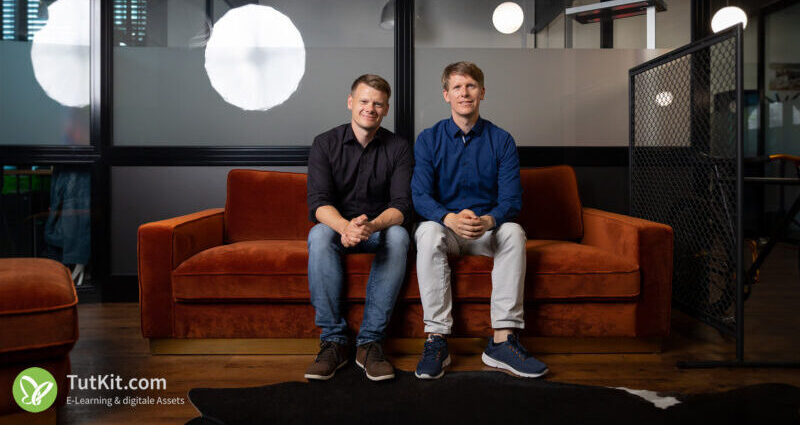
Invest in technical SEO and use professional tools like Seobility. They’re indispensable.
What the community says about Seobility
“Seobility has all of the features of other well known SEO tools, but with a much simpler interface and at a far more reasonable price for someone who only needs it for a few projects and isn’t running an SEO agency.”
“I’ve been using Seobility for a while now, and I have to say I’m very happy with it. It’s easy to use, and you can even use it completely for free if you don’t want to pay. That said, the paid version is a much better option.”
“As a wedding videographer trying to grow my brand online, Seobility has helped me identify and fix SEO issues quickly. The on-page checker and keyword tracking tools are super easy to use — highly recommend it for creatives like me who want results without needing to be an SEO expert.”
Bottom line: SEO is still essential to your success online
SEO matters more in 2026 than ever. You want to show up in both channels: classic Google search and AI search. Both run on the same fundamentals, and SEO is how you build them.
Which route fits you depends on your budget and how complex your site is:
- SMBs and solopreneurs: Start on your own with a tool. Use free plans to try things out, then move up to a paid version if you need to.
- Big budget or high complexity: Have an agency or freelancer handle the initial setup, then take over maintenance yourself with a tool to keep costs down.
Either way, Seobility is an easy place to start: The free plan costs nothing, you keep control of your data, and the tool grows with your needs.
Try Seobility Premium free for 14 days.